01
Established physiology
Autonomic Nervous System
Sympathetic and parasympathetic activity, ANS balance, Stress Index and adaptive reserve.
SympatheticParasympatheticANS balanceStress IndexAdaptive reserve
The clinical product is the scan
The Neuro-Physiology Scan™ (NPS) turns a ten-minute fingertip pulse recording into a structured view of autonomic regulation, stress adaptation, brain rhythm, Ayurvedic balance and bioenergy.
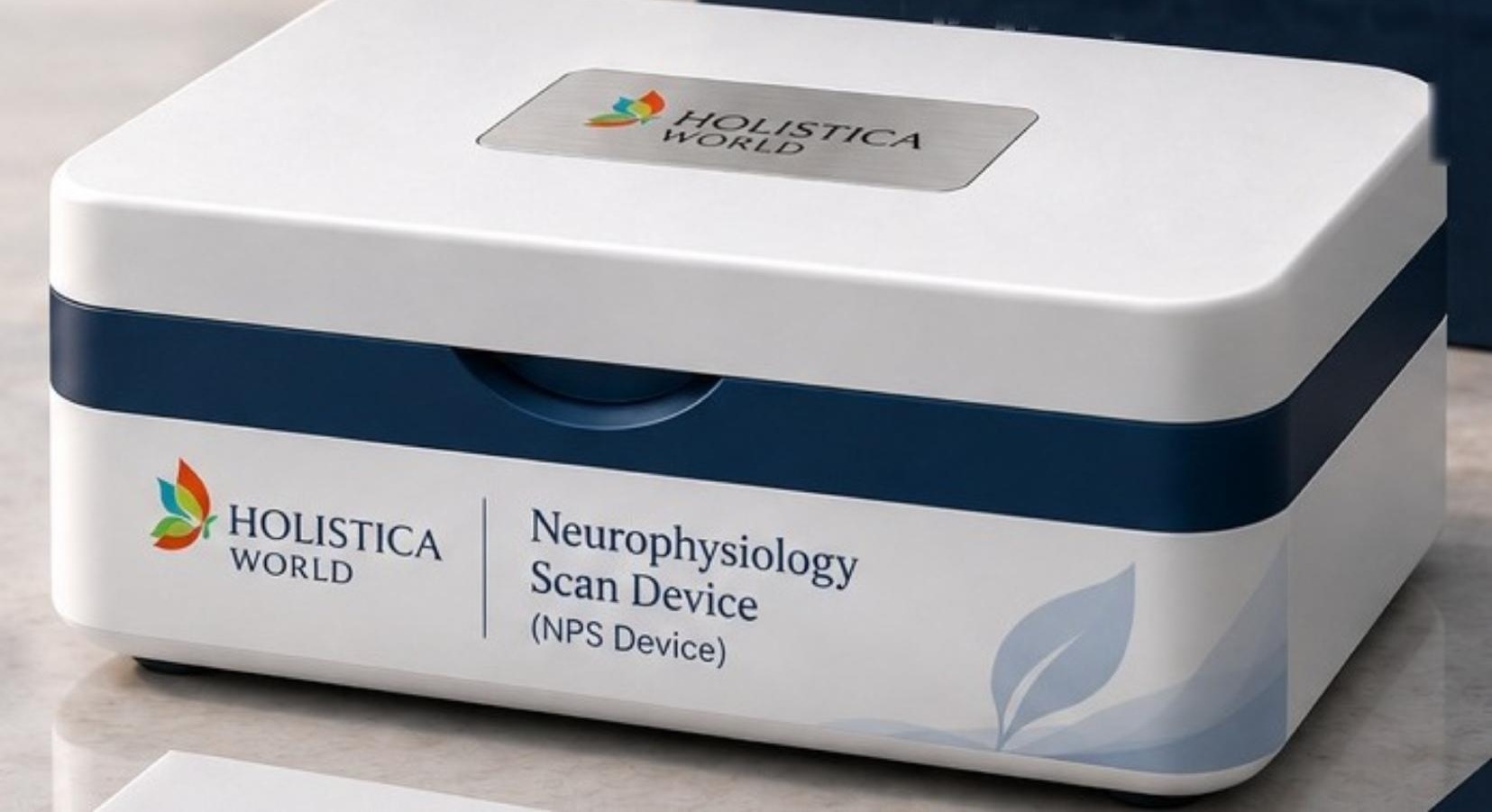
One recording, multiple clinical lenses
A baseline designed for reassessment.
Why it changes the consultation
From conversation to measurable baseline.
Non-invasive
No needles or consumables per scan.
Multi-dimensional
One recording, several physiological views.
Repeatable framework
A consistent protocol supports follow-up conversations.
The parameter architecture
The Neuro-Physiology Scan™ (NPS) report is built in five layers, starting with the autonomic nervous system. Each layer carries an evidence label so you always know what kind of number you are reading.
Sympathetic and parasympathetic activity, ANS balance, Stress Index and adaptive reserve.
Time domain (SDNN, RMSSD, pNN50), frequency domain (VLF, LF, HF, total power, LF/HF) and nonlinear measures (Poincaré SD1/SD2, DFA α1).
Six functional bands estimated from heart-brain coupling.
Perfusion, pulse-wave morphology, vascular ageing index, cellular vitality score and an iodine status indicator.
Tridoṣha, fifteen sub-doṣha indices and the seven-centre bioenergy map.
See how the five layers come together into a clinical plan and a repeatable follow-up.
Read the full guideHow to read the labels
Computed with published, standardised HRV methods (Task Force 1996 and later consensus).
Estimated by proprietary algorithms from pulse dynamics; useful for screening and trend tracking, confirmed with the reference test named in the report.
Maps measured signals onto Ayurvedic and yogic frameworks for practitioner dialogue, not clinical decisions.
Confidence is built, not claimed
NPS does not reduce confidence to one opaque score. It makes the recording, the derived indicators and the interpretive context visible.
The scan protocol has been run in clinical settings with practitioner oversight.
Derived indicators were reviewed and refined against a case base in the thousands.
Cloud algorithms and reporting were developed and tested continuously over four years.
Rhythmogram, histogram and scatterogram let the practitioner review the pulse pattern behind the report.
HR, SDNN, RMSSD, VLF, LF, HF and total power provide an established autonomic vocabulary.
Indicators are shown with ranges, balance views and explanations, not isolated numbers.
Training, monthly physician consultation and case reviews support interpretation over six months.
Clinical confidence still depends on protocol quality, patient context and practitioner judgment. The scan is observational and does not diagnose disease or replace laboratory tests.
The report is the product experience
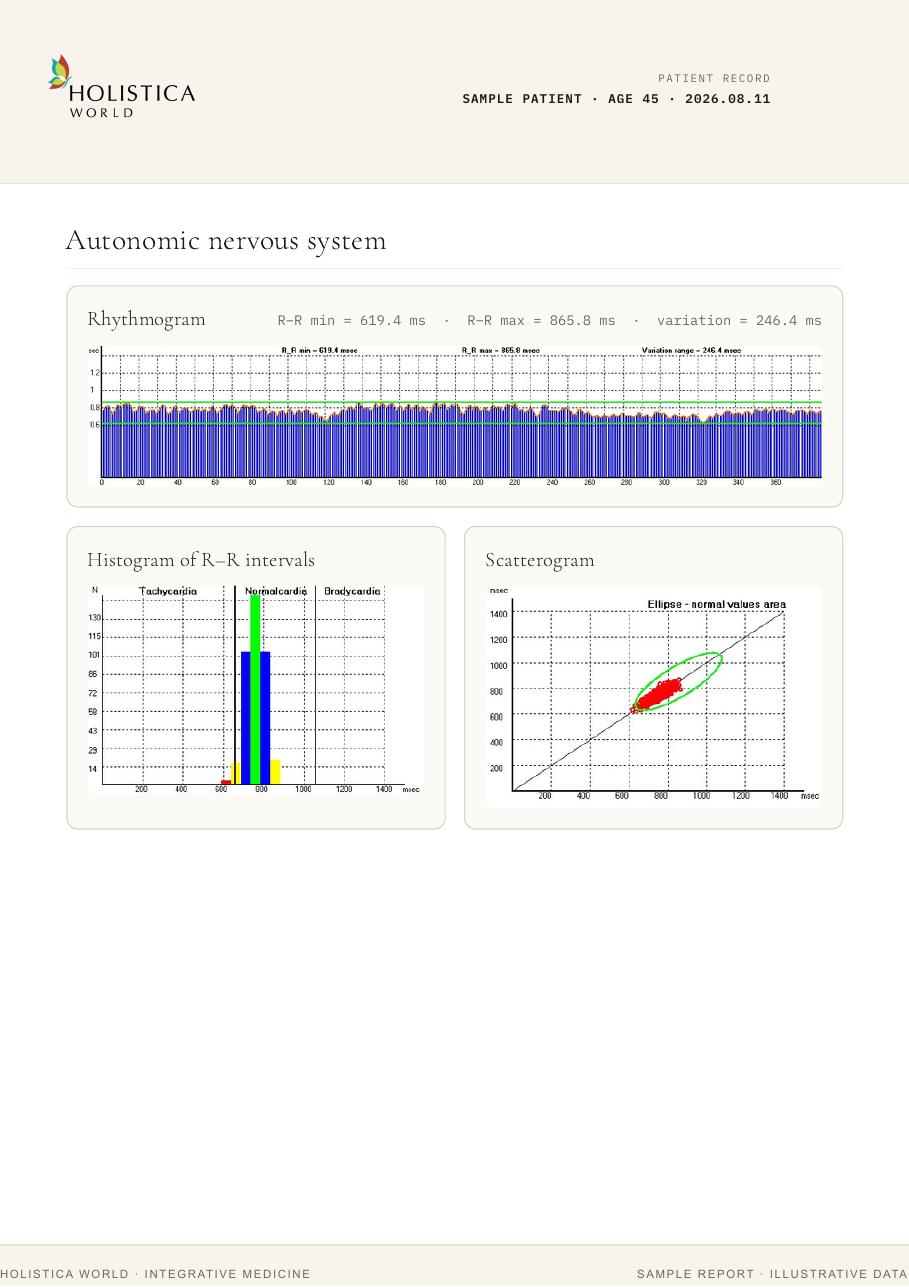
Signal quality
Rhythmogram, histogram and scatterogram make the recording visible.
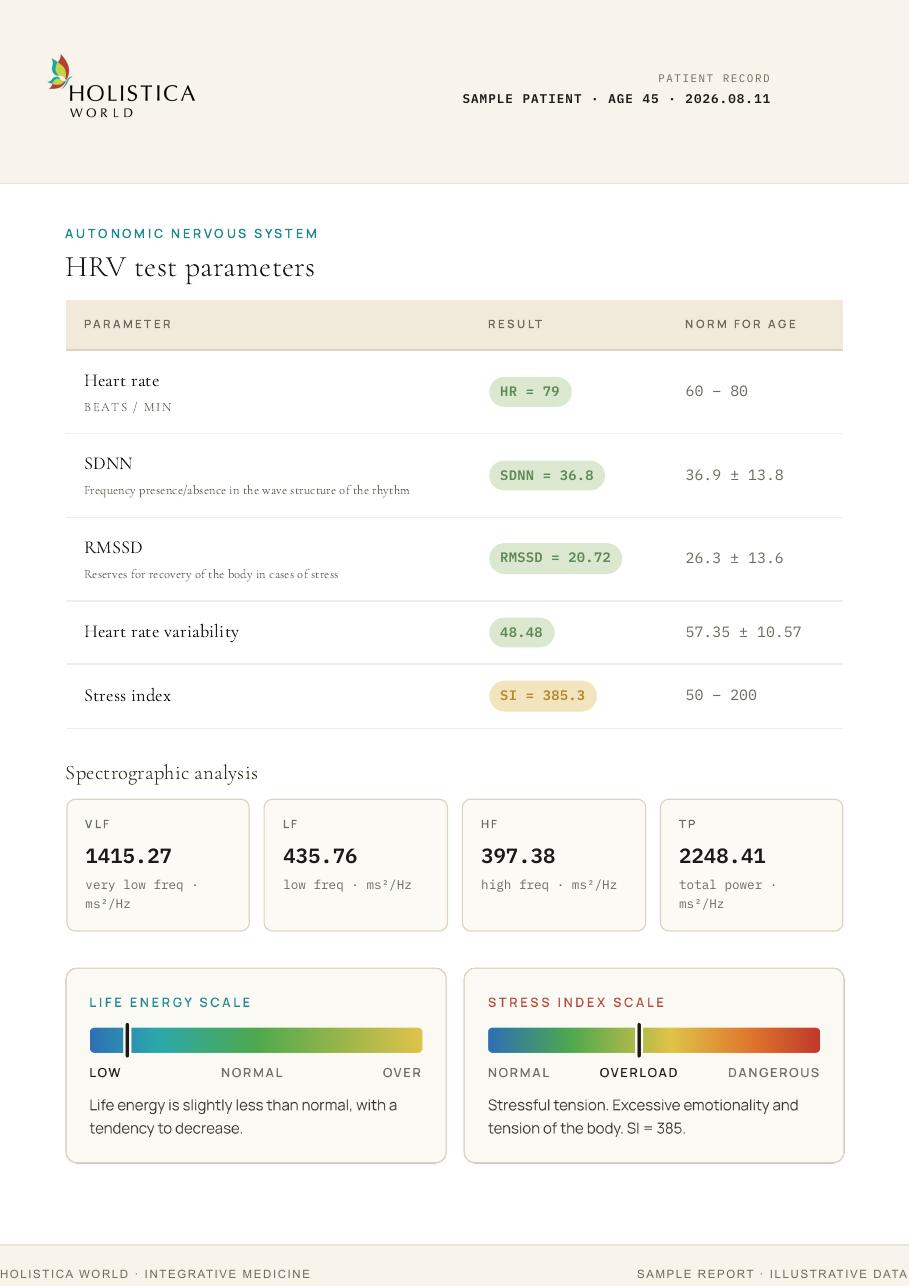
Autonomic profile
Time-domain and frequency-domain indicators sit in one clinical view.
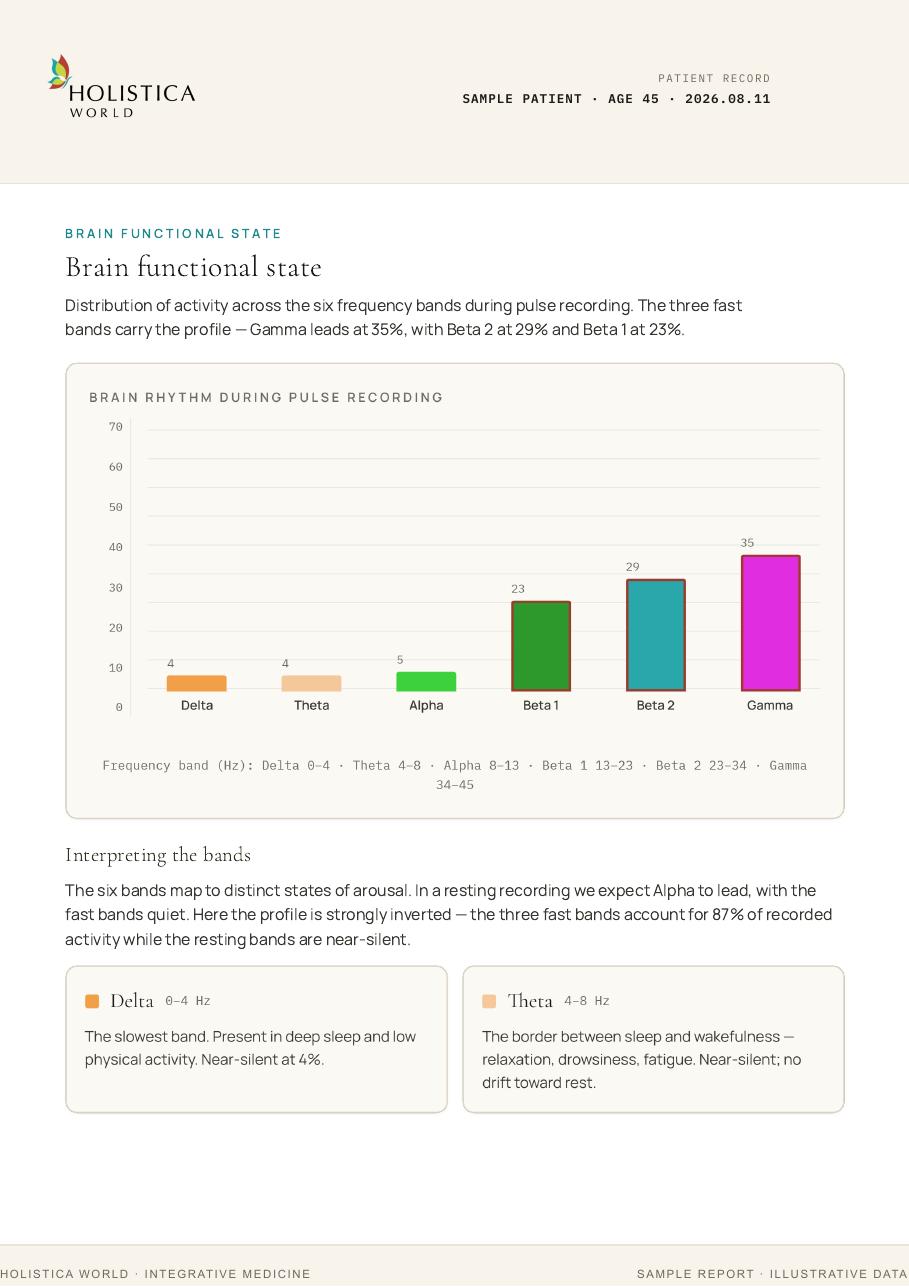
Brain rhythm
Six functional bands are displayed against a readable reference frame.
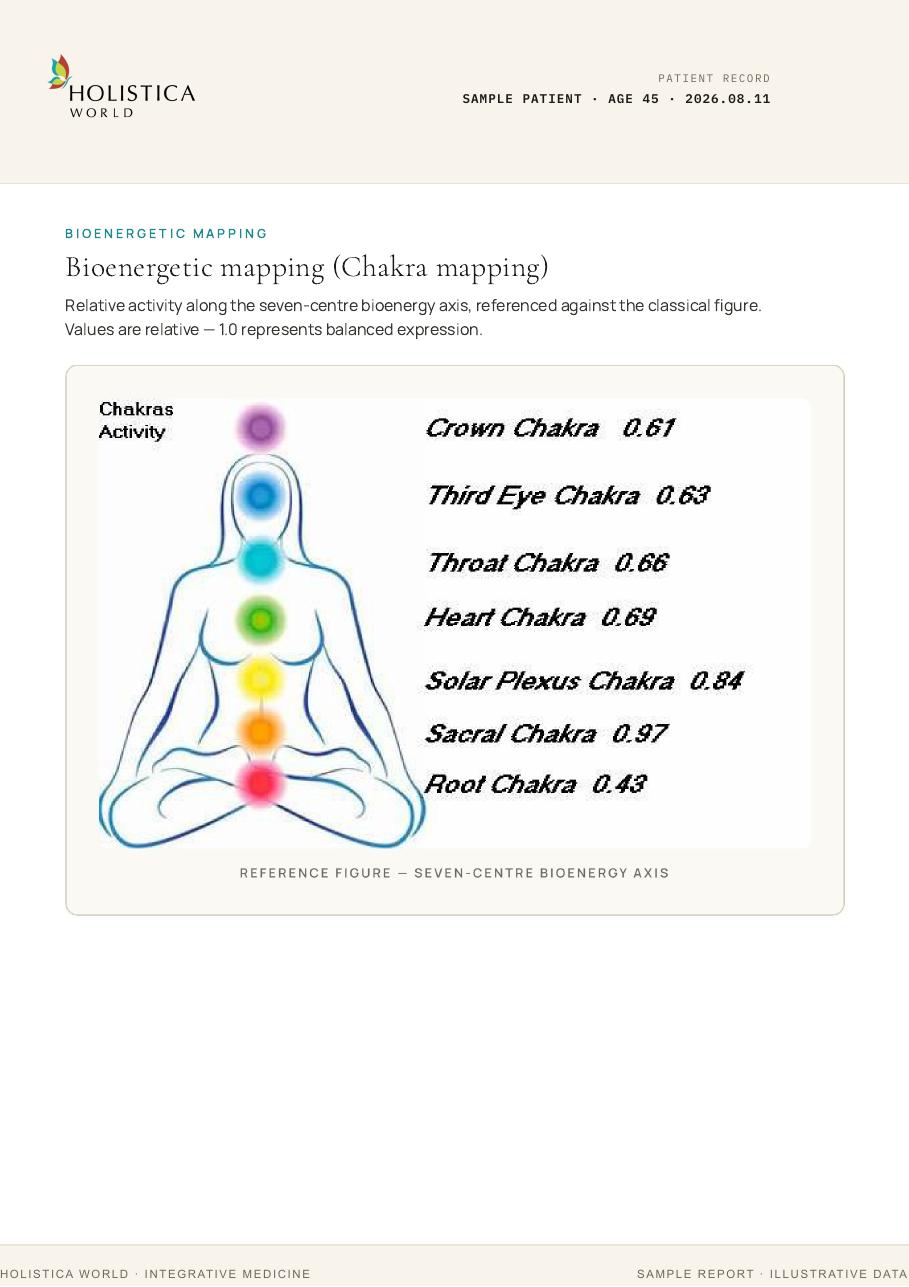
Bioenergy map
A seven-centre visual supports integrative case discussion.
Clinical integration
The included six-month program helps teams connect the baseline to history, examination, laboratory data, intervention planning and reassessment.
01
Run a standardised scan and identify the dominant autonomic, stress and rhythm patterns.
02
Place scan findings beside symptoms, lifestyle, examination and available laboratory evidence.
03
Use the shared picture to support personalised priorities and patient communication.
04
Repeat the same protocol to discuss direction of change over time.
Cellular health and iodine profile
Pulse-wave morphology and perfusion are modelled into a cellular vitality score and an iodine status indicator. Both are screening indicators; the report names the laboratory tests that confirm them.
Bioenergy mapping
The seven-centre map offers an integrative conversation layer, interpreted with the wider clinical picture rather than in isolation.
Brain functional rhythm
The six-band estimate adds a functional lens for discussing activation and recovery patterns within the care plan.
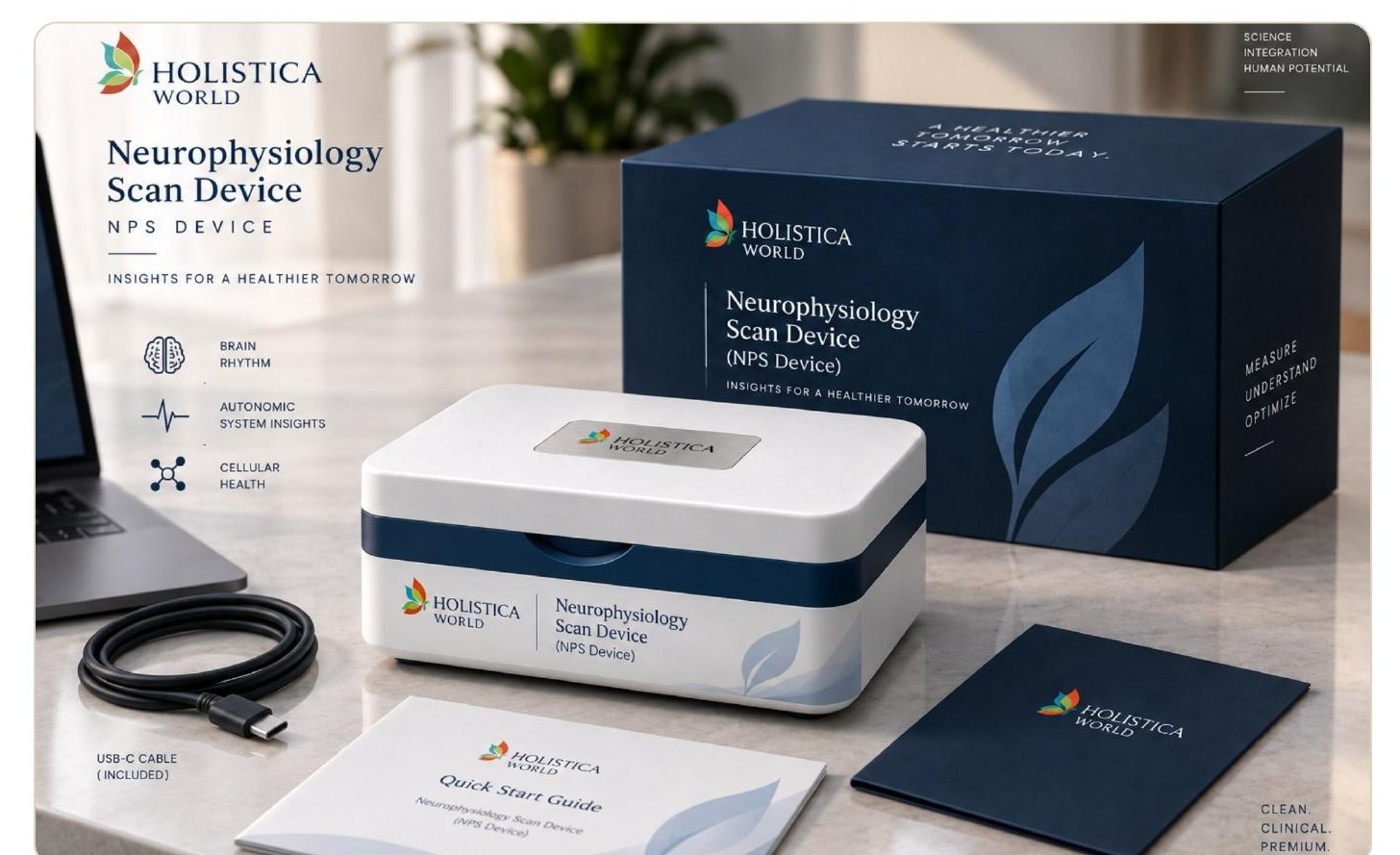
The complete clinical program
Starting at ₹2.75 Lakhs. Pricing available on request.
The program includes the scan system, software, operator training, clinical orientation, patient communication material, monthly integrative physician consultation and twelve months of technical support.
Questions before you begin
Short answers on the scan, its safety and what a clinic receives. The full FAQ covers accuracy, data handling and partnership terms.
Read the full FAQPartner with us
Grow the NPS network
We welcome resellers, territorial distributors, state and master distributors, and practitioner affiliates who understand responsible clinical communication and long-term clinic relationships.
Choose Authorised Reseller (non-exclusive), Territorial Distributor (exclusive territory) or State & Master Distributor (state or larger). Quarterly commitments apply, with product, training and marketing support.
Proposed structure. Final terms are confirmed in your signed agreement.
For practitioners who introduce suitable clinics to NPS. Approved affiliates receive referral support and program resources; benefits and eligibility are confirmed during review.